Sunday, July 18, 2004

Sit first; then stand and run!

Jesus with Martha and Mary

(Sixteenth Sunday of the Year (C): This homily was given on July 18, 2004 at St. Pius X Church, Westerly, R.I. Read Luke 10: 38-42.)

[For the audio version of this homily, click here: Sixteenth Sunday 2004]


This is a message for everyone, but especially for the young people who attended the Steubenville High School Youth Conference last weekend. And it’s an easy message to remember because it consists of just 3 words: sit, stand, and run. All of us are called to be disciples of Jesus Christ, and being a disciple of Jesus Christ means making the effort to sit, to stand, and to run.

But it all starts with sitting! Sitting, believe it or not, has a certain priority over the others. We must sit first, then stand and run. Because if we don’t sit first, we won’t stand very long and we won’t run very well. It seems that Mary, the sister of Lazarus, understood this timeless, spiritual truth, while Martha, her sibling, did not. We’re told in today’s Gospel that Mary SAT at Jesus’ feet and listened to him speak when our Lord came for a visit one day, while Martha ran around the house like a chicken with its head cut off!

Martha was running without sitting first; and so it should come as no surprise that she wasn’t running very well. It’s very clear from the text that she was angry (at her sister), annoyed (at the situation), and filled with pity (for herself!).—“Lord, do you not care that my sister has left me by myself to do the serving? Tell her to help me!”

If Martha had spent just a little time with Mary sitting at the Lord’s feet and drinking in his truth and wisdom, I’m convinced that she would have been much happier, much more peaceful—and she probably would have been a much better hostess! When she was serving, her mind would have been focused on what she was doing and not on her anger toward her sister—and that would have made a big difference.

Today the Lord says to you young people (and to everyone else): SIT at the feet of Jesus (make that a priority in your daily life); then STAND up for what’s true and good, and RUN the race of faith!

But, practically speaking, how is this to be done? What exactly does it mean to sit at the Lord’s feet? Well, those of you who went to the youth conference last weekend should have a very good idea of what it means—because in effect that is what you did for two and a half days at LaSalette Shrine: you sat at the feet of Jesus, who spoke to you through the talks, and the music, and the skits, and the times of prayer and discussion.

Right now, you are also sitting at the feet of Jesus, the Jesus who speaks to you at this and at every Mass—even through someone like me! (Now isn’t that incredible?! Who says miracles don’t happen?!) Having a daily, regular prayer time is yet another way of sitting at the feet of Jesus. So is coming to Thursday night prayer group.

If you’re not sitting at the Lord’s feet in ways like these, you will not be able to “stand” for very long, if at all.

That is to say, you won’t be able to stand up for what’s right and true in the midst of the world’s temptations and lies— because you won’t have either the knowledge or strength to do so! Sit first; then stand. A teenage girl who comes to prayer group on Thursday nights defended Pope Pius XII in a term paper she wrote this past spring for one of her classes at Westerly High School. Pius XII has been condemned by many people in recent years for his supposed “silence” during World War II in the face of the Nazi atrocities against the Jews.

But the truth of the matter is, Pius XII was not silent, and through his words and actions hundreds of thousands of Jews were saved from the Nazi death camps. This girl made that clear in her paper, she backed it up with historical evidence, and she got an A+ for a grade! She stood up for the truth effectively, because she sits at the Lord’s feet regularly—at Mass and prayer group in particular.

St. Paul in his letters talks about “RUNNING the race” of faith! That’s what this life is supposed to be all about; that’s the real meaning of human existence. “Running” in this sense means following God’s call, growing in personal holiness, spreading the Gospel message, performing works of charity—and making a concrete difference for Jesus Christ in the world!

But it all begins with sitting! Sit; then stand and run. That’s the way to run the race of life successfully; that’s the way to keep your Steubenville experience alive. But most importantly, it’s the way to stay on the road to heaven and win the prize of eternal life!

Sunday, July 11, 2004

And Who Is My Neighbor?


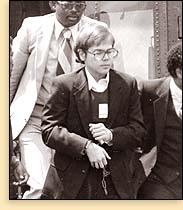
President Ronald Reagan (top) and John Hinckley

(Fifteenth Sunday of the Year (C): This homily was given on July 11, 2004 at St. Pius X Church, Westerly, R.I. Read Luke 10: 25-37.)

[For the audio version of this homily, click here: Fifteenth Sunday 2004]


“And who is my neighbor?”

This was the lawyer’s question to Jesus in today’s Gospel passage from Luke 10. But this also needs to be our question! Each of us needs to pose it and answer it in our own heart—honestly!—and then we need to compare our personal responses to the one Jesus gives in this text.

Now to properly understand Jesus’ answer, we need to “modernize” the main character of the story, the Samaritan. We’re told in the parable that a man traveling from Jerusalem to Jericho was attacked and beaten by robbers, and then left to die on the side of the road. This man—this innocent victim—was clearly Jewish, as were the two people who went by but refused to help (the priest and the Levite). The only one who stopped to lend a hand is identified as a “Samaritan.” And he didn’t just put a Band Aid on the suffering Jew and then continue on his merry way; he treated the beaten man like a brother! He cleaned his wounds and wrapped them in fresh bandages, and he provided for the man’s continued care.

Now Scripture doesn’t tell us what the lawyer’s face looked like when he heard all this, but I’m quite certain he wasn’t smiling, because at the time most Jews and Samaritans hated each other! In fact, I don’t think it would be a stretch to say that Jews and Samaritans of the first century normally had the same attitude toward one another that radical Islamic Fundamentalists currently have toward citizens of the United States!

So, if you want to experience the force of Jesus’ message in the same way that the Jewish lawyer did who first heard the story, imagine two Americans neglecting a fellow citizen of theirs who had just been beaten and robbed, and a radical Islamic Fundamentalist coming to his aid and treating him like a member of his own family.

The point Jesus was making to the Jewish lawyer was simple: “Like it or not, Samaritans are people, too! And all people have an inherent dignity, because they’ve been created in the image and likeness of God. In that sense, everyone is your neighbor.”

We currently live in a world where many people think of their neighbor as “everyone but . . .”—everyone but the unborn baby in the womb; everyone but the embryo with those stem cells I want; everyone but those people who have a skin color different than mine; everyone but the person who hurt me and my family; everyone but the man in the persistent vegetative state; everyone but [fill in the blank].

Do you know what always impressed me about Ronald Reagan? It was that he considered John Hinckley to be his neighbor (in the sense that I’m using the term “neighbor” in this homily)! John Hinckley, of course, was the guy who tried to kill him back in 1981! And yet, Reagan forgave Hinckley—publicly; he called him a “misguided young man,” and refused to allow hatred and bitterness to fill his heart. He didn’t say that Hinckley should go free—nor should he have said that!—but he never forgot that Hinckley was a human being with an immortal soul.

In that he was just like our Holy Father, Pope John Paul II, who forgave the man, Ali Acga, who shot him in St. Peter’s Square in May of that very same year, 1981.

And who is my neighbor?

Jesus, in effect, said, “Everyone”; he did not say, “Everyone, but . . . “.

What do you say?

Sunday, June 27, 2004

For Freedom Christ Set Us Free!

(Thirteenth Sunday of the Year (C): This homily was given on June 27, 2004 at St. Pius X Church, Westerly, R.I. Read Galatians 5: 1.)

[For the audio version of this homily, click here: Thirteenth Sunday 2004]


Galatians 5:1—the first line of our second reading today—was the theme verse of the Steubenville High School Youth Conference two years ago. Those who attended should remember it, since it was quoted over and over again by the people who gave the talks: “For freedom Christ set us free; so stand firm and do not submit again to the yoke of slavery.”

So have you? If you’re a teenager or a young adult—or a chaperone—who attended that conference, have you stood firm in your Catholic Christian faith? Have you been a good role model for your peers? Have you led others to Christ?

Or have you slipped back into your old sinful habits?

“For freedom Christ set us free.” Here in the United States many people think of freedom primarily in political or economic terms. Their reasoning process goes something like this: Our country is a representative republic; we have a democratic form of government. We can buy and sell products all over the world; we can openly share our ideas; we can own private property—thus we are free. Those who live in places around the world where rights like these are denied are not free.

That’s their point of view, and it certainly has some validity. But St. Paul reminds us in Galatians 5:1 that this political/economic understanding of freedom is much too simplistic and superficial. For St. Paul, freedom was—first and foremost—a spiritual issue, a matter “of the soul.”

Listen to this passage from the Catechism, paragraph 1731: “God created man a rational being, conferring on him the dignity of a person who can initiate and control his own actions. ‘God willed that man should be ‘left in the hand of his own counsel,’ so that he might of his own accord seek his Creator and freely attain his full and blessed perfection by cleaving to him.’”

The Catechism is reminding us here that freedom can either be used or abused. If it’s used properly, it perfects us as persons and brings us one step closer to heaven, the final goal of human existence. If it’s abused, on the other hand, it corrupts us, leads us into a kind of slavery, and puts us on the fast track to “the other place.”

Let me give you a contemporary example of the latter, a contemporary example of freedom being abused. A man I know is presently involved in an adulterous relationship. It’s been going on for well over a year. He knows he should end it; every once in a while he talks about ending it. But it’s gone on for so long at this point that part of him does not want to terminate the affair. Does his conscience bother him at all? Of course, it does. That’s why he’s also become a heavy drinker! The alcohol helps him disregard the messages his conscience is continually giving him.

Economically and politically, this man is free—completely free! He can own property; he can buy and sell legitimate products on the open market; he can speak his mind in public. But deep down inside (where it really counts), he’s a slave: he’s a slave to lust, a slave to drink, a slave to a lifestyle that’s destroying him emotionally, spiritually, and even physically!

And the interesting thing is, many years ago this man had a genuine conversion experience, and afterward practiced his Catholicism faithfully—until he made the choice to turn away, and the choice to go on living in sin, the choice not to repent. Perhaps St. Paul had someone like this man in mind when he wrote Galatians 5:1: “For freedom Christ set us free; so stand firm and do not submit again to the yoke of slavery.”

This year’s Steubenville Youth Conference will have another theme verse from Sacred Scripture. But Galatians 5:1 could actually be the theme verse every year, because it’s the message God always has at the end of the weekend for those who make a personal commitment to Christ and his Church: “Christ has set you free at this conference; so stand firm and do not submit again to the yoke of slavery! Don’t go back to your former way of living!”

This is also the message God has for us every time we exit the reconciliation room after making a good confession and receiving absolution!—“I’ve freed you from your sins; now go forth and stay free!”

And the good news is, we can stay free—by the grace of God—if we use our freedom properly and choose to!

Sunday, June 13, 2004

Lanciano, Santarem—and the Greatest Eucharistic Miracles of All

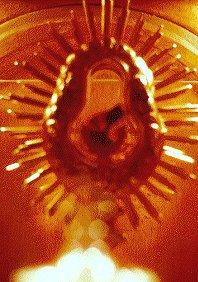
Eucharistic Miracle of Santarem

(Corpus Christi 2004 (C): This homily was given on June 13, 2004 at St. Pius X Church, Westerly, R.I. Read 1 Corinthians 11: 23-26.)

[For the audio version of this homily, click here: Corpus Christi 2004]


Most of us are familiar with the Eucharistic Miracle of Lanciano, Italy. Way back in the 8th century, a Basilian monk of that city was having doubts about the Real Presence of Jesus Christ in the Holy Eucharist. He prayed to have those doubts removed.

Well one day, as he was celebrating Mass, God answered his request in miraculous fashion by literally changing the bread and wine into flesh and blood at the consecration.

The elements were never consumed; they’ve been preserved for 12 centuries at a shrine in Lanciano.

In 1971, the Church decided to have the elements analyzed by a team of scientists. Their testing led them to the following conclusions:

The blood of the Eucharistic Miracle is real blood and the flesh is real flesh. Both belong to the human species.
The flesh consists of the muscular tissue of the heart.
The blood type is identical in the flesh and blood (type AB).
The proteins in the blood are in the same proportions as those found in normal, fresh blood.
There is no trace whatsoever of any materials or agents having been used to preserve the elements.


This is probably the most famous of all the Eucharistic miracles that have occurred since Jesus instituted the sacrament at the Last Supper.

A lesser known one took place in Portugal in the mid-13th century. I had the privilege last year of visiting the church where this miracle is preserved, the Church of St. Stephen in the town of Santarem.

Here’s how it happened:

A woman who lived in Santarem at the time was greatly troubled by her husband’s adulterous behavior—as she should have been! Unfortunately, however, she made the mistake of going to the local sorceress—the local witch—to find a solution to her problem.

The witch promised the woman that her husband would change his ways and become faithful to her again—if the woman obtained for the witch a consecrated host from the local church. (In case you’re not aware of it, those involved in the occult love to desecrate the Blessed Sacrament.)

So the woman pretended to be ill and went to see the local priest at St. Stephen’s, asking him for prayers and for Holy Communion.

The priest innocently gave her the Eucharist, which the woman took out of her mouth (obviously when the priest wasn’t looking) and put into the veil she was wearing on her head. But she never made it to the witch’s house.

As the woman left the church, the host began to bleed! She panicked (which is quite understandable!), ran home with the bleeding host, and put it into the cedar trunk where she kept her clean linens.

During the night, however, the woman and her husband were awakened by bright rays of light coming from the trunk. At that point, she confessed to her husband what she had done.

Not surprisingly, both were converted on the spot! The two spent the entire night in adoration of the Blessed Sacrament. Some neighbors also saw the light that evening, and they began coming to the house the next day.

Finally the parish priest was told. He took the Eucharistic miracle back to the church, where it’s been ever since.

I tell this story on Corpus Christi Sunday because of something I saw on my way to the Church of St. Stephen last year.

We came into town that day on a bus—a 48 passenger coach. Now busses of that size have no problem negotiating the relatively wide streets of Westerly, but they do have a big problem getting around old European towns like Santarem, where many of the roads are extremely narrow.

Consequently, we were forced to park about a half mile away from the church, and walk the remaining distance. Well, during that little stroll, we passed a building that was marked: “Assembly of God Church.” It was less than a quarter mile from St. Stephen’s.

That struck me.

Why?

Because members of the Assembly of God Church do not believe in the Real Presence of Jesus Christ in the Holy Eucharist; they do not believe in transubstantiation! For them, the Eucharist is merely a symbol!

Here we have people who are living and worshipping just a couple of blocks away from a genuine Eucharistic miracle, and they still don’t believe!

So I guess we shouldn’t be surprised at Catholics in our part of the world who don’t believe in the Real Presence! Nor should we be surprised at Catholics who miss Mass on Sundays and Holy Days (like Ascension Thursday a few weeks ago), and don’t think twice about it. Nor should we be surprised at Catholics who come to Communion after they miss Mass without going to Confession first. Nor should we be surprised that so many people come into church and fail to genuflect to the tabernacle (either before they take their seat or before they go over to the statues to light candles). Nor should we be astonished when people receive the Holy Eucharist at Mass and walk right out of church afterward—even though they’ve been told it’s wrong by their parish priest 1,001 times (and since I’ve been here for 15 years, that number is no longer an exaggeration!).

If there are people in Santarem who lack faith in the Eucharist even though they live in such close proximity to a Eucharistic miracle, why should we expect a different situation here?

But, thankfully, there are many others in this part of the world who do believe, and who do have a great love and appreciation for the Blessed Sacrament.

One of them—a daily communicant who has gone through some very difficult times recently—wrote the following to me a few months ago: “When you go to Mass and Communion for a long period of time, every day, it seems as if the continuing presence of the Eucharist has a cumulative effect in blotting out sin and vice and building up virtue. It’s like his presence in the body and the prayers of others overcomes and reduces concupiscence [the inclination to sin]. Just an observation. I never would have been able to navigate so freely through my trials over the last few years without [Jesus in the Eucharist]. I would have been a basket case.”

The effect of the Holy Eucharist in this man’s life will probably never make headlines like the miracles of Lanciano and Santarem—but the strength and help he’s received are miraculous nonetheless.

And he’s not alone. For those who receive Holy Communion with faith, for those who receive humbly and worthily, for those who receive prayerfully and with open hearts, a similar type of miracle takes place through the Blessed Sacrament.

And, in many respects, my brothers and sisters, those are the greatest Eucharistic miracles of all!