Sunday, February 06, 2005

What Price Are You Willing To Pay To Let The Light Of Christ Shine Through You?


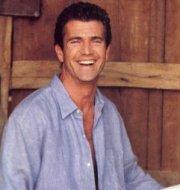
Mel Gibson

(Fifth Sunday of the Year (A): This homily was given on February 6, 2005 at St. Pius X Church, Westerly, R.I. Read Matthew 5: 13-16.)

[For the audio version of this homily, click here: Fifth Sunday of the Year 2005]


Barbara Nicolosi is a screenwriter in Hollywood—and a committed Catholic. I know those may sound like mutually exclusive categories—given what we normally see on television and in the movies—but Barbara is helping to show that they aren’t. In fact, if she has her way there will be many others like her in the entertainment industry in the near future. She’s the founder of an organization called “Act One: Writing for Hollywood.” There she teaches aspiring Christians the art of screenwriting.

Her purpose, of course, is to educate Christians in this skill, so that they can then write good scripts!—scripts with positive moral and spiritual messages—and slowly change the atmosphere in the modern media. Obviously it’s a very worthy goal: to transform “Tinseltown” from the inside. We should all pray that Barbara succeeds.

I mention her today because last week a parishioner sent me a link to a page on her blog site. Let me share with you now some of what she wrote on that page:

The Oscar [Nominations] are out, affirming once again, just how very, very sick America’s storytellers have become. I know many of you are very dismissive of the culture’s storytellers, but that is short-sighted. A country with sick storytellers dreams sick dreams, or doesn’t dream at all. Both are societal suicide.

When Jesus healed, some people called him a demon. Jesus then noted that, “All sins will be forgiven men, except the sin against the Holy Spirit.” The sin against the Holy Spirit, is seeing something that is good, something that God reveals to your inner being as good, and, then, calling it evil. In the same way, we could argue that it is a sin against the Holy Spirit to see something that is evil, and call it good.
So, this year, the top Oscar nominations have gone to . . .

. . . a movie that makes a hero out of a man who murders his adopted daughter.

. . . a movie that makes a hero out of an abortionist.

. . . a movie that makes a hero out of a discredited researcher who was obsessed with sex and encouraged many others to experiment with various perversions.

. . . a movie that lionizes a billionaire narcissist who died insane from syphilis.

. . . a movie that suggests it is funny when an engaged man sets off for a week of debauchery before his marriage with his drunkard best friend.

. . . a movie that glamorizes four alley cats dressed as beautiful people who fornicate and commit adultery with each other, and indulge in various sexual perversions until the movie ends.

. . . a movie that makes a hero out of a paraplegic in despair who wants to kill himself.

The truth is, secular Hollywood had next to nuthin’ this year. Really. Except for “Neverland” and the kids movie “Incredibles,” they got nuthin’ this year to give an award to. Nuthin’ that people will be watching in five years—nevermind in fifty. . . .

What makes this year’s [nominations] even darker is the fact that there was this one big cinematic elephant out there that, as we all predicted, was passed over for all the top awards. This movie was . . .

. . . the biggest independent movie in cinema history.

. . . the third biggest box-office movie of the year.

. . . a movie that moved millions of people to tears, had the entire world talking, and even led several murderers to turn themselves in!

. . . [a movie that was] the most courageous directoral achievement since “Citizen Kane.”

. . . which just happened to be the story of the redemption of the world by the Son of God. Too bad.

Yes, Barbara, it is too bad—much too bad. Although I don’t think Mel Gibson is losing an awful lot of sleep over it.

But it does highlight the importance of our Lord’s words to us in today’s Gospel text from Matthew 5: “You are the light of the world. A city set on a mountain cannot be hidden. Nor do they light a lamp and then put it under a bushel basket; it is set on a lampstand, where it gives light to all in the house. Just so, your light must shine before others, that they may see your good deeds and glorify your heavenly Father.”

The purpose of The Passion of the Christ was to glorify the Savior, not Mel Gibson. But in order for the Savior to be glorified, Gibson had to be willing to take these words of Matthew 5 very seriously! And for him that meant more than just saying, “I love you, Jesus; I want to bring your light into the world.” For the Savior to be glorified, and for his message of love and forgiveness to go forth to millions of people on the silver screen, Mel had to be willing to take some very difficult risks. First of all, he had to be willing to put his own money on the line ($25 million of it, to be exact); he had to be willing to risk his reputation, his credibility, his popularity—and, ultimately, his career as an actor in mainstream Hollywood films.

That was the price he had to be willing to pay to let his light shine forth for Jesus Christ.

And, to some extent, he did pay a very hefty price by being called everything from an “anti-Semite” to a “religious fanatic” in the mainstream press—even before the film was released! And he continues to pay a price by being snubbed at these awards ceremonies, where he should be “cleaning up”!

I dare say any other movie that was the box office hit that the Passion was would be up for every major award at the Oscars this year! You know it; I know it; Barbara Nicolosi knows it; and the members of the Academy of Motion Picture Arts and Sciences know it!

But it isn’t! Yes, they put it up for a few minor awards—no doubt to try to pacify the “religious right”—but not for the ones that matter most, like “Best Picture” and “Best Actor”.

Does Mel Gibson care? On the one hand, I’m sure he doesn’t. But it’s still a big slap in the face from his peers, so it has to hurt him, at least on some level. Lest we forget, he’s a human being like the rest of us.

What price are you willing to pay to let the light of Christ shine in and through you?

Really—what price are you willing to pay?

Are you willing to lose some money, to miss out on some financial gain? Are you willing to give up a few friends? Or a promotion at work? Or some of your popularity?

We know what Mel Gibson was willing to lose.

We can also figure out pretty easily what Barbara Nicolosi has been willing to lose. I’m sure there are many screenwriting jobs she’s been denied in recent years, for the simple reason that she’s a Roman Catholic who takes her faith seriously. That fact has immediately disqualified her! In these instances, those in charge probably didn’t even read her work; they had already made up their minds.

Jesus needs people like Mel and Barbara who are willing to take this Gospel text seriously and be “lights” for others. He needs those who are willing to take the risks and step out in faith. He needs those who will put their Catholic beliefs and principles ahead of their personal desires and preferences.

He needs those, in other words, who are willing to lose what will soon pass away, to gain what will last forever.

Are you willing?

That’s a question I need to ask myself, and it’s a question you need to ask yourself.

May we all give it some very serious thought before we answer.

Sunday, January 30, 2005

Not All Of Life’s Teachers Are Found In The Classroom!

(Fourth Sunday of the Year (A): This homily was given on January 30, 2005 at St. Pius X Church, Westerly, R.I. Read Matthew 5: 1-12.)

[For the audio version of this homily, click here: Fourth Sunday of the Year 2005]


One of Mark Twain’s best known lines is this one: “I never let my schooling interfere with my education.”

There are probably several million students who have quoted that statement over the years—students who were looking for a good reason to skip school or not do their homework!

“But mom, remember what Mark Twain said: ‘I never let my schooling interfere with my education.’”

To which most moms have probably responded, “I don’t care what Mark Twain said, just go to your room and finish your homework!”

I’m sure this statement was originally said tongue-in-cheek by Mr. Twain (or Mr. Clemens, if you want to use his proper name). And yet, standing behind his words is a very important truth: Not all of life’s teachers are found in the classroom! Some are found there, certainly, but most are found in other places.

Mark Twain knew that during his life he had been educated in locations other than school buildings. And so have we!

In this regard, Jesus Christ—who speaks to us in Scripture and through his Church and sometimes in other ways—is supposed to be our primary teacher outside of the classroom (and also inside the classroom, if you happen to go to a Catholic School). You could say that Jesus is to be our “Instructor for Life, Numero Uno”.

Of course, I’m not so naïve as to think that Jesus actually occupies that position in the life of every baptized Catholic—but he should!

We see Jesus in his role as “teacher” in today’s Gospel text from Matthew 5. Here the Lord presents himself to us as “The New Moses.” Moses, as we all know, was the great teacher of God’s Old Testament Law, a law that was rooted in the Ten Commandments. God first gave those commandments to Moses on Mt. Sinai, and when Moses came down the mountain he gave them to the people of Israel.

Jesus, in this scene (and for the next 3 chapters of Matthew), presents the “New Law of the Gospel” to his disciples. Just as Moses “proclaimed” the Old Law from a mountain, so Jesus proclaims this New Law from a mountain. And just as the Old Law was rooted in the Ten Commandments, so this New Law of human conduct is rooted in those same commandments, and in these 8 sayings known to the world as “the Beatitudes.”

If we are trying to live a Christ-centered life—that is to say, if we are striving to make Jesus our primary teacher, then these are the virtues and attitudes to which we will aspire. First of all, we will recognize our complete dependence on God and try to live accordingly (basically that’s what it means to be poor in spirit). We will desire the virtue of meekness (which is another word for humility). We will be sorrowful in the face of the sin and evil we encounter in the world. We will be merciful and forgive those who offend us. We will desire justice (and work for it!). We will want our motives to be pure. We will work for peace (beginning in our families!); and we will be willing to stand up for the truth of Christ and to endure the persecution that sometimes comes with being a truly committed Catholic.

These 8 Beatitudes represent some of the core lessons of Jesus Christ, the Teacher. But let’s be honest and clear about it: Jesus is not the only teacher outside the classroom who is influencing us and our culture at the present time (which is precisely why the Beatitudes are talked about much more than they’re lived!); and he’s definitely not the only teacher influencing our young people.

Let me demonstrate that fact with a little story. Recently an adult shared with me a conversation she had with a local 13-year-old boy. She was trying to be empathetic, as she spoke to this young man about some of the pressures teenagers are currently facing in contemporary American society. He then asked her to get specific regarding some of these “pressures”. Well, this woman just happens to know what some middle school children have been doing in Wilcox Park on Friday nights. (If you don’t know—and I didn’t until I spoke with this woman—the best way I can explain it in this setting is that they’re following the example set by a former president.)

So she brought this into the discussion.

And what was his response?

He said, “What’s the big deal? No one’s getting hurt. And at least no one’s getting pregnant!”
When she attempted to convince him that this behavior is wrong (that it’s a violation of the 6th commandment), and that these young people are putting their physical and spiritual lives in danger, he said, “You guys (i.e. grown-ups) think that stuff will scare us, but it doesn’t. We aren’t gonna stop.”

Later, when the topic of teen pregnancy was raised, he said, “If some girl does get pregnant, she can always have an abortion. It’s not like ‘it’ can feel anything anyway.”

“It,” of course, is the baby.

Not all of life’s teachers are found in the classroom.

Who is teaching this young man about life? Who is teaching him about right and wrong? Who is teaching him how to interact properly with members of the opposite sex?

Certainly not Jesus Christ!

Some better candidates might be the people at MTV, or the people who put pornography on the internet, or the producers of TV shows like Desperate Housewives and The OC—because he’s obviously learning a lot more from sources like those!

The fact is, our contemporary American culture—which is steeped in materialism and hedonism—attempts to “educate” all of us every day. And sometimes it succeeds—as it obviously has with that 13-year-old.

We’ve all heard the saying: “You are what you eat.”

Well, here’s a similar saying that’s equally as true: “You are what you learn.”

If you learn something and accept it as true, it will have a definite effect on your life—for better or for worse! Just ask that 13-year-old boy or some of his friends from the park.

How important it is, therefore, that we learn—and accept—the truth of Jesus Christ, as summarized in the Beatitudes and the Ten Commandments!

For young people, Catholic schools and CCD programs can certainly help this to happen, by reinforcing the Gospel message. But, since most learning and character building take place outside the classroom, it all has to begin somewhere else.

That “somewhere else,” of course, is in the home, in the family.

So, what exactly are you learning, and what exactly are you teaching? That’s a question for everyone, but most especially for the parents here present.

Jesus Christ wants to work through you to teach your children, since you are their primary religious educators. But for that to happen, you’ve got to be learning from the Lord yourselves (as we all need to be learning from him)!

Notice what it says about the disciples of Jesus at the beginning of this Gospel text from Matthew 5. In the opening line we read, “When Jesus saw the crowds, he went up the mountain, and after he had sat down, his disciples came to him, [and] he began to teach them . . . “

The disciples learned the Beatitudes that day—and they eventually became good teachers of the Beatitudes—because they came to Jesus! If they had not come to Christ, they would have learned nothing of the Beatitudes; consequently they would not have been able to teach them.

We come to Jesus when we’re faithful to Mass, and when we listen at Mass with open ears and hearts—because the Word of Christ is taught here.

We come to Jesus when we have a regular prayer time each day, when we read Scripture, when we go to Confession, and when we study the content of our Catholic faith.

We even come to Jesus when we surround ourselves with good Catholic friends who speak the Lord’s word to us in their own way. These are friends who encourage us to be faithful, and who aren’t afraid to challenge us or correct us when we begin to waver.

Lord Jesus Christ we have come to you, our teacher, at this Mass, and we thank you for having instructed us through the Scriptures that were just read, and through the homily we’ve just heard.
Help us, by the grace of the Eucharist we will receive in a few moments, to go forth from this assembly and to be good teachers of this message both by our words and by our actions. And may our teaching have a powerful influence on all those young people who are looking to us every day for guidance and direction. We ask this through the same Christ, our Lord. Amen.

Sunday, January 23, 2005

The Call Of The First Priests, And The Call Of The Priest Today

(Third Sunday of the Year (A): This homily was given on January 23, 2005 at St. Pius X Church, Westerly, R.I. Read Matthew 4: 12-23.)

[For the audio version of this homily, click here: Third Sunday of the Year 2005]


Fr. Stephen Rossetti is a Catholic priest and a licensed clinical psychologist. He often speaks at formal gatherings of clergy throughout the United States. A few years ago, he gave a presentation to all the priests of our diocese at our annual pastoral studies’ day in Warwick.

After the terrible sex abuse scandals of 2002, Fr. Rossetti decided to survey priests in 11 different dioceses in order to assess their morale. Given the negative portrayal of the priesthood in the media (especially after the scandals), he expected the worst—he expected to find many priests on the verge of despair. But, much to his surprise, that was not the case. Generally speaking, the results were very positive.

For example, 92% of the 834 priests he surveyed said they either agreed or strongly agreed with the statement: “Overall, I am happy as a priest.” In October of 2002, the Los Angeles Times ran a poll of 1,854 priests (this, interestingly enough, was done right in the midst of the scandals) and their poll yielded a similar result: 91% of the priests said they were satisfied with the “way [their] life as a priest [was] going,” and 90% said they would do it all over again. If they could turn back the hands of time, they would choose once more to respond to God’s grace and serve the Lord in the Catholic priesthood.

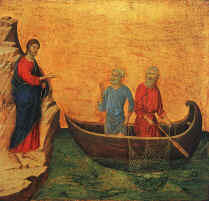
“As [Jesus] was walking by the Sea of Galilee, he saw two brothers, Simon who is called Peter, and his brother Andrew, casting a net into the sea; they were fishermen. He said to them, ‘Come after me, and I will make you fishers of men.’ At once they left their nets and followed him. He walked along from there and saw two other brothers, James, the son of Zebedee, and his brother John. They were in a boat, with their father Zebedee, mending their nets. He called them, and immediately they left their boat and their father and followed him.”

This was the call of the very first priests, as recounted for us in the Gospel of Matthew, chapter 4. And here, I believe, we receive an insight as to why priestly morale today is still very high, in spite of the horrible sins committed by a small percentage of unfaithful priests and bishops over the last 50 years. The insight, simply put, is this: the invitation to serve Jesus Christ in the priesthood is both powerful and inspiring!

When Jesus called them that day on the Sea of Galilee, these apostles didn’t fully understand the nature of the summons. What it actually meant to be a “fisher of men” would only become clear to them with the passage of time and with the help of God’s grace. But even at this point—on the day the Lord called them—these 4 men knew they were being asked to follow someone very special and to do something exceedingly extraordinary!

Why else would they have left their families? Why else would they have left their fishing business? Why else would they have made this radical change in their lives?

Obviously they were convinced that Jesus Christ was worth it!

And so is every good priest today!—every good priest, that is, who understands the dignity of the priesthood! He is also convinced that following Christ and proclaiming the gospel and helping to save souls are worth the personal sacrifice! (Now do you see why those survey numbers of Fr. Rossetti and the Los Angeles Times were so positive?)

I should also mention in this context that this is a response I often give to those who criticize the discipline of celibacy for priests in the Latin Rite. I say to them, “Don’t you think Jesus is worth it? He’s the Son of God and the Savior of the world—isn’t he worth giving up marriage and family for?”

By the way, if you think he’s not worth it, then that says an awful lot about your faith (or perhaps I should say, about your lack of faith!).

That’s not to say it’s easy to live a celibate life! Of course, Jesus never said it would be. But having heard the confessions of married people for the last 19 years, I also know that being married and raising children in the modern world are not easy!

The bottom line is this: If God calls you to it, then he will certainly give you the grace to live it. That truth applies both to the priesthood and to marriage.

And he will give you the grace to live your vocation joyfully!

When Peter, Andrew, James and John left everything to follow Christ as his apostles, I definitely don’t think they left with frowns on their faces! They knew they were embarking on a new adventure, and I’m quite certain they were happy and excited about it. They couldn’t wait for it all to begin!

Perhaps one of the reasons for their excitement was that they had already heard about Jesus from some of their friends and relatives. Remember, the Bible doesn’t give us every detail of every event that occurred during our Lord’s earthly ministry; hence, it’s quite possible that these men already knew at least something about Jesus before they met him on their boats that day.

They had probably been told that this Jesus was a powerful rabbi who said and who did some unique and incredible things; consequently, they were thrilled when he invited them to be among his closest followers.
Every dedicated priest throughout history has felt that same enthusiasm and excitement!

And it’s clear from this Gospel reading that Jesus wasted no time in showing them what their future priestly ministry would involve. After we’re told that the 4 men left everything behind, the next line of the text says, “[Jesus] went around all of Galilee, teaching in their synagogues, proclaiming the gospel of the kingdom, and curing every disease and illness among the people.”

Priestly ministry, following the example of Jesus, involves all these elements: teaching, proclaiming the gospel, and, in a certain sense, “curing.” That last point relates in a special way to the sacraments. The sacraments, which are rooted in the priesthood of Christ himself, bring us the “curing” grace of God in various ways. Perhaps we’ve never thought of them in that way before. In baptism, for example, we are “cured” of original sin and made adopted children of God; in the sacrament of Confession we are “cured” of the eternal consequences of our personal sins; in the Eucharist we are “cured” of our spiritual hunger; in the sacrament of Confirmation we are “cured” of fear, and receive the grace to witness to Christ in the world; in the sacrament of Anointing we are “cured” of spiritual—and sometimes even of physical—ailments.

And this priestly activity of “curing” is not only oriented toward life in this world. Ultimately the cures imparted by the priest in his sacramental ministry are designed to get people into heaven! They have an eternal dimension, which is what makes them so important—and so unique.

A good medical doctor brings people physical cures and healings (and for that we should thank God!), but these last only for a time. Even the most gifted doctor eventually loses every one of his patients—because his patients all have mortal bodies, and those bodies die even after the best of medical care.

But a priest is an instrument of Jesus Christ for the salvation of souls, for the salvation of persons! Through the ministry of word and sacrament, a priest prepares human beings for their ETERNAL destiny! As such, his intention in serving his “patients” is to lose none of them! He desires—and he prays—that all those who hear him and receive the sacraments from him will someday end up in God’s eternal and glorious kingdom.

That is the incredible potential of priestly ministry. It’s literally “out of this world.” And that’s why I thank God every day that he called me—unworthy as I am—to be a “fisher of men,” as he called those first apostles 2,000 years ago on the Sea of Galilee.

Sunday, January 09, 2005

Our Baptismal Mission

(Baptism of the Lord (A): This homily was given on January 9, 2005 at St. Pius X Church, Westerly, R.I. Read Acts 10: 34-38; Matthew 3: 13-17.)

[For the audio version of this homily, click here: Baptism of the Lord 2005]


When I checked my e-mail one day last week I came across a letter entitled, “Fuming mad.” With that title, I couldn’t wait to open it! It was from a doctor in the parish, and here’s what she wrote:

“I plan to be at youth group next Thursday and I have a special request. Can we please discuss that pervert Alfred Kinsey? The movie review of the ‘good doctor's’ biography is in today's Providence Journal. The kids should be quite clear about the lies this guy passed off as science, not to mention the hideous sexual crimes he directed against children all in the name of ‘science’.”

I thought that was a very good suggestion; consequently that’s exactly what we did this past Thursday night with our teenagers. We gave them the “real scoop” on Dr. Kinsey, the highly-praised sex-researcher who in many ways paved the way for the sexual revolution of the last 40 years.

“Fr. Ray, what does this have to do with the baptism of Jesus Christ in the Jordan River by John the Baptist 2000 years ago?”

The answer is: It has a lot to do with it!

The moment Jesus was baptized was the moment his 3-year earthly ministry officially began.

And what was the purpose of his ministry? What was his mission?

Part of the answer to that question is given to us in today’s second reading from Acts 10. In that text St. Peter says (and here I’m using the older translation of the passage): “I take it you know what has been reported all over Judea about Jesus of Nazareth, beginning in Galilee with the baptism John preached; of the way God anointed him with the Holy Spirit and power. He went about doing good works and healing all who were in the grip of the devil, and God was with him.”

That’s where today’s second reading ends. But in the very next verse Peter goes on to say, “We are witnesses to all [that this Jesus] did in the land of the Jews and in Jerusalem. They killed him finally, hanging him on a tree, only to have God raise him up on the third day . . .”

The purpose of Jesus’ ministry—his mission, according to St. Peter—was to do good, and, most importantly, to free people from the grip of the devil. That “grip” comes from sin, and it ultimately leads to hell. Which is precisely why Peter mentions Jesus’ death and resurrection in the very next line! We are delivered from the devil’s grip—here and in the life to come—through the events of Good Friday and Easter Sunday.

Just before he died on the cross, our Lord said, “It is finished.” If he had wanted to he could have said, “Mission accomplished; my ministry is now fulfilled,” and it would have had the same meaning.

And yet, in spite of all this, there is still something incomplete about Jesus’ mission, is there not?

Yes, salvation has been attained for the human race, in the sense that every person can be saved by the blood of Christ; everyone has the potential to receive sanctifying grace and forgiveness for their sins.

But that grace still must be applied to individual souls! Jesus fulfilled his earthly mission and won the grace of salvation for us, but now that grace has to be applied to you and to me and to all those out there in the world.

And that’s where we come into the picture. As Jesus’ disciples, we have a responsibility to continue his mission by bringing souls to him so that they can experience redemption.

This is part of our mission in this life—a mission that’s rooted in our baptism!

You see, when we’re baptized as Catholic Christians, we aren’t just baptized for our own benefit. Yes, we’re born again; yes, we’re forgiven; yes, we receive sanctifying grace and become members of the Church and heirs to the kingdom of heaven. But if we actually intend to enter that kingdom at the end of our lives here on earth, we need to take seriously our baptismal responsibility to evangelize others.

The new Catechism reminds us of this requirement in paragraph 1270. There it says, “Reborn as sons of God, [the baptized] must profess before men the faith they have received from God through the Church and participate in the apostolic and missionary activity of the People of God.”

This is one reason why I deal with a lot of current events and issues in my homilies. I consider it my responsibility as your pastor to help you know the truth of Christ, and how that truth applies to what’s going on in the world right now, so that you can go out there and defend and spread the faith—which is your baptismal responsibility!

Which brings us back to Dr. Kinsey. (No, I didn’t forget about him.) As is the case with Hugh Hefner and Margaret Sanger (the founder of Planned Parenthood), Alfred Kinsey has been turned into a big hero by the modern-day promoters of the sexual revolution (such as the people who made this new movie about him starring Liam Neeson that came out a few weeks ago).

In today’s world, if you’re going to fulfill your baptismal mission and bring other people to Jesus Christ, you need to know the truth about Alfred Kinsey and others like him. You have to be able to help men and women understand why they should listen to Jesus and the Church—rather than Kinsey, Sanger and Hefner—when it comes to matters of sexual morality.

The doctor who wrote me that e-mail understands this quite well. That’s why she wanted me to address the topic with the teenagers. She wanted me to enlighten them on the real Alfred Kinsey, so that they can be better defenders and promoters of the truth of Christ. After all, those teens have the same baptismal responsibility that the rest of us do.

On that note, here are some of the real facts about Kinsey that I shared with them the other night. You’re not likely to hear any of these from people in the liberal media. Believe it or not, I’ve out some of the more disgusting ones:

1. Kinsey compiled statistics of “normal” sexual behavior by including a high percentage of pedophiles, inmates, sex offenders, pimps and prostitutes and described them as “average” Americans. [And you wonder why he classified so many perverted acts as “normal”?] He kept no records that could corroborate his findings.

2. The Kinsey data are the scientific basis for the Model Penal Code, which led to the elimination, or reduction in penalties for sex offenses, including rape, child abuse and prostitution.

3. Kinsey’s data are also the basis for most of America’s sex education curricula, which begin with the premise that children are “sexual beings” entitled to sex at all ages.

4. He believed that all sexual behaviors were “natural,” including bestiality, pedophilia, homosexuality, sodomy, and sadistic sex. He argued that sex and morality had no connection. (Source: Concerned Women for America web site: www.cwfa.org.)

By the way, there’s also evidence that Kinsey sanctioned sexual experiments on children. Bet that isn’t in this new movie! The same media people who bashed the Church for her scandals a few years ago are completely silent on this matter. According to Dr. Judith Reisman—who’s done extensive research on the issue—Alfred Kinsey allowed hundreds (and perhaps even thousands) of children to be abused in obtaining information for his “scientific” reports.

If a committed Catholic knows these facts about Alfred Kinsey—a man who is extolled in our secular society—he will have a much easier time making the case for chastity. That should be obvious. If you can show somebody that one of the founders of the sexual revolution was a “sexually-confused, dishonest, voyeuristic pedophile-advocate” (as one web site called him), you’ll have a much easier time getting them to see that the teachings of the Catholic Church on sexuality make a lot of sense.

In fact, the more you know the truth about any of the hot-button issues of our time—abortion, stem cell research, etc.—the more reasonable and rational the “old fashioned” Gospel becomes.

And helping people to see the reasonableness of the Gospel, is a real help in bringing them closer to Christ and the Church; it’s a key to evangelizing them in today’s scientific culture.

In the final verse of the Gospel of Matthew, Jesus says, “Go, therefore, and make disciples of all the nations. Baptize them in the name of the Father, and the Son and the Holy Spirit. And teach them to carry out all that I have commanded you.”

We are all called to teach others the truth of Jesus Christ—first and foremost by what we do, but also by what we say. That’s part of our baptismal mission. May the Lord help us to do it well, so that at the moment of our death we will be able to say what Jesus could have said on Good Friday: “Mission accomplished!”