Sunday, July 13, 2025

And Who Is My Neighbor?


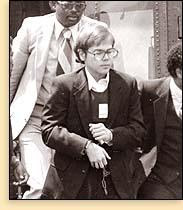
President Ronald Reagan (top) and John Hinckley

(Fifteenth Sunday of the Year (C): This homily was given on July 15, 2025 at St. Pius X Church, Westerly, R.I., by Fr. Raymond Suriani.  Read Luke 10:25-37.)

 [For the audio version of this homily, click here: Fifteenth Sunday 2025]


“And who is my neighbor?”

This was the lawyer’s question to Jesus in today’s Gospel passage from Luke 10.  But this also needs to be our question!  Each of us needs to pose it and answer it in our own heart—honestly!—and then we need to compare our personal responses to the one Jesus gives in this text.

Now to properly understand Jesus’ answer, we need to “modernize” the main character of the story, the Samaritan.  We’re told in the parable that a man traveling from Jerusalem to Jericho was attacked and beaten by robbers, and then left to die on the side of the road.  This man—this innocent victim—was clearly Jewish, as were the two people who went by but refused to help (the priest and the Levite). 

The only one who stopped to lend a hand is identified as a “Samaritan.”  And he didn’t just put a Band Aid on the suffering Jew and then continue on his merry way; he treated the beaten man like a brother!  He cleaned his wounds and wrapped them in fresh bandages, and he provided for the man’s continued care. 

Now Scripture doesn’t tell us what the lawyer’s face looked like when he heard all this, but I’m quite certain he wasn’t smiling, because at the time most Jews and Samaritans hated each other!  In fact, I don’t think it would be a stretch to say that Jews and Samaritans of the first century normally had the same attitude toward one another that radical Islamic Fundamentalists (and groups like Hamas) currently have toward Jews and towards the citizens of the United States!

So, if you want to experience the force of Jesus’ message in the same way that the Jewish lawyer did who first heard the story, imagine two Americans neglecting a fellow citizen of theirs who had just been beaten and robbed, and a radical Islamic Fundamentalist coming to his aid and treating him like a member of his own family.

The point Jesus was making to the Jewish lawyer was simple: “Like it or not, Samaritans are people, too!  And all people have an inherent dignity, because they’ve been created in the image and likeness of God.  In that sense, everyone is your neighbor.” 

We currently live in a world where many people think of their neighbor as “everyone but . . .”—everyone but the unborn baby in the womb; everyone but the embryo with those stem cells I want; everyone but the person who has a skin color different than mine; everyone but the person who’s a member of this or that ethnic group; everyone but the person who’s a member of this or that religious organization; everyone but the person who hurt me and my family; everyone but the person who lives a sexually immoral lifestyle; everyone but [fill in the blank].

Do you know what always impressed me about Ronald Reagan?  It was that he considered John Hinckley to be his neighbor (in the sense that I’m using the term “neighbor” in this homily).  John Hinckley, of course, was the guy who tried to kill him back in 1981.  And yet, Reagan forgave Hinckley—publicly; he called him a “misguided young man,” and refused to allow hatred and bitterness to fill his heart.  He didn’t say that Hinckley should go free—nor should he have said that!—to let Hinckley go free at that time would have been a sin against justice.  But Reagan never forgot that Hinckley was a human being with an immortal soul.  In that he was just like our former Holy Father, Pope St. John Paul II, who forgave the man, Ali Acga, who shot him in St. Peter’s Square in May of that very same year, 1981.

And who is my neighbor? 

Jesus, in effect, said, “Everyone”; he did not say, “Everyone, but . . . “. 

What do you say?


Sunday, July 06, 2025

The Mission of the 72 in Luke 10; the Mission of the Laity in the Church Today


(Fourteenth Sunday of the Year (C): This homily was given on July 6, 2025 at St. Pius X Church, Westerly, R.I., by Fr. Raymond Suriani.  Read Luke 10:1-12, 17-20.)

[For the audio version of this homily, click here: Fourteenth Sunday 2025]


What do you do to serve the Lord?

I think many lay Catholics would answer that question by telling you what they do in and around the church—“I’m a lector”; “I’m an extraordinary minister of Holy Communion”; “I’m an altar server”; “I’m a cantor”; “I sing in the choir”; “I’m on the parish finance council”.

Now please don’t misunderstand me—all these acts of service are good!  Lay people have essential roles to play in the liturgical and financial life of this and of every other parish.  But these roles are only secondary!  Even though they’re very important, they are not at the core of a lay person’s vocation in the Church.

In paragraph 898 of the Catechism, it says this (quoting one of the documents of Vatican II): “By reason of their special vocation it belongs to the laity to seek the kingdom of God by engaging in temporal affairs and directing them according to God’s will.”

Very simply, this means that if you’re a lay Catholic (and most of you are), then you are to live in the world, but you are not to be “of” the world; and you are to take your Catholic faith with you wherever you go.  That’s your primary calling!  Your faith, in other words, is to guide your personal life, your marital life (even in its private dimensions), your family life, your recreational life—and yes, even your life at work and/or at school.

When I was a deacon at St. Philip’s Church in Greenville in 1985, there was a lector at the parish who was involved in local politics.  He eventually became a big political figure at the state level; if I mentioned his name, many of you would recognize it immediately.  But this man was also pro-choice when it came to the issue of abortion.  Thankfully, he eventually was told he could no longer serve as a lector.  I mention him today because he’s a great example of a lay person who was “doing something for God” at Sunday Mass, but who was not doing for God what he really should have been doing for God out there in the world.  He was fulfilling a lay person’s “secondary role” very well—he was an excellent reader!—but he was failing miserably in fulfilling the primary role of a Catholic lay person in modern society. 

His problem, of course, was that he had “compartmentalized” his faith—as many Catholics today do!  In the words of Pope John Paul II—words that he wrote in his famous document on the laity, Christifideles Laici—this man had engaged in the “unwarranted separation of [his] faith from [his] life.”  (CL, 2)

I was reminded of the vocation of lay people as I reflected on today’s Gospel reading from Luke, chapter 10.  In this story, Jesus sent out 72 disciples on a special mission—a mission that was a little bit different from the one he had given to his 12 apostles.  Jesus told these 72 to go ahead of him to every town he intended to visit, to prepare the way for his arrival.  They weren’t supposed to lead services in synagogues; they were supposed to share their faith with people in a less formal manner, to prepare them to receive Jesus and his message.  That, of course, is exactly what you are supposed to do as Catholic lay people: by your words, actions and example—in the midst of your everyday activities—you are called to prepare others to receive Jesus and his message. 

I once spoke to a woman on the phone who wanted to register for the parish and have her daughter baptized.  That was wonderful.  But during the course of our conversation she indicated that she hadn’t practiced her faith in many years, and she had no intention of practicing her faith in the future.  Her idea was to have her daughter baptized, and then let her daughter decide what she wanted to be when she was old enough.  This woman obviously didn’t understand her role as a Catholic lay person!  As a mother, she was called to teach the faith to her child; she was called to be an example of faith and charity to her child—to prepare the way for Jesus to become the Lord of her child’s life! 

Parents, I hope that makes sense to you!  Jesus wants to visit your children and become the Lord of their lives—so he sends you ahead of him to prepare the way (like he sent the 72!).  Jesus wants to visit your workplace and change the lives of your co-workers, and so he sends you ahead of him to prepare the way.  Jesus wants to visit your school and change the lives of your fellow students, and so he sends you ahead of him to prepare the way.

Will everyone accept the message of faith and love that you offer?  Of course not!  Some—even perhaps in your family—will reject the truth of the Gospel, regardless of how lovingly and respectfully you present it to them!  Jesus made that fact clear to the 72. 

But the difficulty of the task doesn’t make it any less of an obligation! 

All of this makes me think of Blessed Carlo Acutis, who will be canonized a saint later this year.  Carlo was born in 1991 and died of leukemia in 2006 at the age of 15.  He was an ordinary person—a young, ordinary lay person—in so many ways: he enjoyed spending time with his friends; he loved to play sports; he loved animals; he played a musical instrument.  But in the midst of all those ordinary things, he had a strong and unwavering faith in and love for Jesus and the sacraments—which interestingly enough he did NOT get from his parents!  In fact, his mother says that when Carlo was born, she had only been to Mass 3 times in her entire life. Carlo evangelized her and her husband (he in essence fulfilled the mission of the 72 for them)—mostly by asking them questions about God that they couldn’t answer!  In an article that appeared in the National Catholic Register his mother was quoted as saying:

“[Carlo] pushed me to do research and to read. I began to take theology courses and reflect on life. I discovered the beauty of my faith. We are all on a journey in the spiritual life, but because of Carlo, I was inspired to start that journey.  Carlo saved me.”  Later on she added, “He read the Bible every day as well as the Catechism put together by Pope John Paul II. Carlo would say that the Bible was his compass. By the age of 11, he was teaching catechism to younger children.”

Of course, what Carlo is most known for around the world is the skill he had working with computers.  Some have called him a computer genius. Computers, as we all know, can be used for good or they can be used for evil.  Carlo used them for good.  As it said in the Register article, “Once he mastered computer programming, Carlo began to use it to spread the Catholic faith. He developed a website on Eucharistic miracles, which he worked on for four years. The website has a compilation of 196 stories of Eucharistic miracles. It has been turned into an exhibit that has traveled the world.”

That exhibit has even traveled here to Rhode Island.  Many of us, I’m sure, have been blessed to see it.  No doubt it’s led many people all over the world to open their hearts to Jesus and the Catholic faith.

So here we have an ordinary lay person—a teenager no less—fulfilling the mission of the 72 disciples—for his parents, and for people in many other places.  So it can be done—by anyone—at any age!

St. Luke tells us that when the 72 came back from the mission Jesus had given them, they had good news to report.  Yes, they had faced difficulty and opposition, but because of their efforts many people were healed and many lives were changed for the better.

Your mission as a lay person in 2025 is like the mission of the 72 in many respects, but it’s different in this one sense: their mission lasted only for a brief period of time; yours—like mine—lasts a lifetime.  When our missions are finally finished—on Judgment Day—we also will be asked to give a report to Jesus of what we’ve done in his service.  Let’s pray that when that moment comes we, like the 72—and like Blessed Carlo Acutis—will be able to tell Jesus lots of good news!


Sunday, June 15, 2025

The Blessed Trinity and the Family


(Trinity Sunday 2025 (C): This homily was given on June 15, 2025 at St. Pius X Church, Westerly, R.I., by Fr. Raymond Suriani.  Read Proverbs 8:22-31; Romans 5:1-5; John 16:12-15.)

 [For the audio version of this homily, click here: Trinity Sunday 2025]


Some people consider the Blessed Trinity to be a theological mystery which is far removed from their everyday experience.

But that’s not true!

Yes, the Trinity is a deep mystery of our Catholic faith.  As the Catechism of the Catholic Church says, “It is the mystery of God in himself.” (CCC 234) But the Catechism also tells us that “God has left traces of his Trinitarian being in his work of creation.”  (CCC 237)  This means that the Trinity is not just an abstract dogma for theologians to speculate about.  Believe it or not, the inner life of the Trinity is actually reflected in our human experience.

Consider, for example, the family.  If we examine the Church’s teaching on the Trinity carefully, we see that it has much to teach us about family life here on earth.

First of all, the Trinity reminds us that the nuclear family is a necessary social and cultural phenomenon.  Let’s face it, the traditional family (i.e., mother, father, and children) has been under attack in our society for a number of decades now.  Many no longer consider it the norm.  As Christians, we must say, “Sorry, but it is the norm.  After all, our God is a ‘family’ of persons: Father, Son and Holy Spirit.  The inner life of God is a ‘family life,’ and the standard here on earth is the family as God designed it.”

The Trinity also reminds us that fathers are important!  That’s also a radical idea in this culture of ours which has been infected with certain radical feminist ideas.  The Catechism says that in the Blessed Trinity the Father is “the source and origin of the whole divinity.” (CCC 245)  Without the Father, you would not have the Son or the Holy Spirit.  The “family” of the Trinity needs the Father, and families on earth need a loving father (or at least a loving father figure).  That role is essential.  On that note, a happy Father’s Day to all the dads who are here with us this morning.

The dogma of the Trinity also reminds us that a bond of deep love should unite every family.  It is a perfect love which unites the Father, Son and Holy Spirit.  Our family relationships should reflect that divine, self-giving love. 

Do yours?

The Trinity also teaches us that the uniqueness of every family member must be recognized and treasured.  Some mistakenly think that the Father, Son and Holy Spirit are just 3 different ways that we perceive the one true God.  But that’s not true!  The dogma of the Trinity teaches that there are three distinct persons in the one God.  The Father is not the Son; the Son is not the Spirit; and the Father is not the Spirit.

Sometimes in families younger children are pressured into being “just like” their older siblings.  I’ve seen that happen so many times!  And it’s almost always a big mistake; it very often leads to rebellion.  Every child is unique, and their unique gifts should be affirmed and nurtured by everyone else in the family.

The Trinity also reminds us that children can do great things if they receive their foundation in a loving family.  God the Son was eternally begotten by God the Father; then, in time, he took on flesh and saved the world!  Your children could never pull that one off, but they can do great things—and achieve great holiness—if given the proper guidance, encouragement, and example in the home.  Remember, some of the great saints of the Church were young people: Maria Goretti, Dominic Savio, and Aloysius Gonzaga—to name but a few.  And now we have Blessed Carlo Acutis who will probably be canonized a saint in the very near future.  His online research on miracles of the Eucharist has touched people all over the world.  Blessed Carlo was only 15 when he died of leukemia in 2006.

The Trinity also reminds children of the need to be responsible and accountable to their parents.  After the Second Person of the Blessed Trinity took on a human nature, he was always “accountable” to his heavenly Father.  The Scriptures make that fact crystal clear.  Listen to his words: “The Son cannot do anything by himself—he can do only what he sees the Father doing.  For whatever the Father does, the Son does likewise.” (John 5:19)

And again: “I have not spoken on my own; no, the Father who sent me has commanded me what to say and how to speak.”  (John 12:49)

The obedience of Jesus to his heavenly Father (and to his earthly parents!), is to be the model for every child who is still under his or her parents’ care.  Hear that, young people!

And finally, the Trinity reminds us that it’s important for parents to “let go” of their children at the proper time.  That’s a difficult one for many mothers and fathers.  The heavenly Father is to be your model here.  As St. Paul said, “When the designated time had come, God sent forth his Son . . . “ (Galatians 4:4)  The Father was sending his son into a situation that would ultimately result in his death, but he still sent him, because it was the right thing to do to save us.

And then, after the Ascension, the Father and the Son sent the Holy Spirit into the world to be with us always.  That was yet another divine experience of “letting go.”

The Blessed Trinity is a mystery that we will never fully understand.  But what we do know about the Trinity can teach us much about the most practical and basic realities of life—like the family. 

May the Triune God—Father, Son and Holy Spirit—bless all of our families this day, so that they will better reflect here on earth the love—the perfect love—that the 3 divine Persons have for one another in the Blessed Trinity in the kingdom of heaven.  Amen.


Sunday, June 08, 2025

Stir the Gift into Flame!

(Pentecost 2025 (C): This homily was given on June 8, 2025 at St. Pius X Church, Westerly, R.I., by Fr. Raymond Suriani.  Read Acts 1:1-2:11.)

[For the audio version of this homily, click here: Pentecost 2025]


“For this reason, I remind you to stir into flame the gift of God bestowed when my hands were laid on you.”  (2 Timothy 1:6)

That, I would say, is one of the most important verses in the Bible—especially if you want to understand what’s going on (and what’s not going on) in the lives of young people in the Church today.

St. Paul wrote those words 2,000 years ago to a young priest named Timothy, reminding him that he needed to grow in the grace of his ordination.  It wasn’t enough that Paul had placed his hands on Timothy’s head and had ordained him a priest.  If Timothy was to be the faithful servant—the faithful disciple—that Jesus wanted him to be and needed him to be, then Timothy had to respond to the grace he had been given at his ordination by “stirring it into flame”—through prayer, and the Eucharist, and Scripture reading, and by taking advantage of the opportunities God was giving him in his life to grow in his relationship with Jesus Christ, his Lord and Savior.

As the old saying goes, “A fire not fed is very soon dead.”  (Actually that’s not an old saying; I made it up for this homily—but it’s true nonetheless!  And it summarizes Paul’s message to Timothy here.)

The reason I mention this today, on this feast of Pentecost, is because whenever I hear this particular verse of Scripture, I always think of its application to another sacrament: the sacrament of Confirmation.  When that sacrament is administered to people—as it was to our teenagers at the 5 o’clock Mass on May 31—hands are “laid upon them” (usually by the Bishop) and they receive another outpouring of the Holy Spirit (in addition to the one they received at baptism), so that they can be witnesses to Jesus Christ in the sometimes hostile environment of the world.

That’s the purpose of the sacrament: to empower us to be strong and committed disciples who want to win the world for Christ!  As Jesus said to his apostles before the first Pentecost, “You will receive power when the Holy Spirit comes upon you, and you will be my witnesses in Jerusalem, throughout Judea and Samaria, and to the ends of the earth.”  During this year’s Confirmation Mass our new bishop, Bruce Lewandowski, told the young people that through the power and gifts of the Holy Spirit God wants to do great things in them and with them and for them in their lives.

But that’s not what always happens, is it?  All too frequently young people (and not-so-young people) get confirmed, and then, instead of winning the world for Christ, they end up being won-over by the world!

Our retired bishop, Thomas Tobin, wrote about this several years ago in our diocesan newspaper.  Here’s some of what he said in that article:

There’s a cloud that hangs over Confirmation these days—an elephant in the room if you will, and that’s the reality that a majority of young people being confirmed will, sooner or later, stop practicing their faith—and these days it’s often sooner rather than later.


One national statistic indicates that 80% of young Catholics fall away from the Church within ten years of receiving the Sacrament. That’s an astonishing number! Some will return to the regular practice of their faith as adults, especially when they get married (if they’re married in the Church, that is!) and have children of their own. Some will join the ranks of cultural Catholics, maintaining a structural link to the Church but attending Mass only occasionally, on Christmas and Easter for example. And some will never return to the Church, having discarded their religious practice as an unwarranted intrusion in their life, foisted upon them as children by well-meaning parents.


In any event, it’s terribly discouraging to know that so many young people, having just publicly renewed their profession of faith and commitment to Christ and his Church, will abandon the practice of their faith, with some dropping out as soon as they can. For these, Confirmation is no more than a graduation ceremony, and having placated their parents and grandparents, they’re set free to fly their separate ways.


So what’s the problem, my brothers and sisters?  Why is this happening?  Is there something wrong on God’s end of things?  Is he withholding his Holy Spirit from these teenagers?  Is the sacrament they’re receiving invalid or defective in some way?

Well, of course not.  If it is administered with the proper matter and form by a competent minister, a sacrament (any sacrament) is valid—meaning that it gives the grace that it signifies.

So these adolescents have received the Holy Spirit.  When the bishop or priest traced a cross on their forehead during the Confirmation Liturgy and said, “Be sealed with the gift of the Holy Spirit” that’s precisely what happened.

So the problem’s not with God! 

The problem is that these young people are failing “to stir into flame the gift they received” when hands were laid on them and the Holy Spirit came to them in the sacrament. 

As far as I’m concerned, it’s that simple.

Now there can be many reasons for this failure: a bad example from their parents; poor religious instruction at their parish; a sin (or a number of sins) that they’re not willing to repent of in their lives; the lack of a personal relationship with Jesus Christ; lies that they’ve been told in school about Christianity and the Church.

There are lots of possibilities.

One of the reasons why we have youth group at St. Pius every other Thursday night, one of the reasons we go to the Steubenville High school Youth Conference every summer (and other such events), is to give teenagers here—especially those who have already been confirmed—the opportunity to “stir into flame” the gift they received from God at their Confirmation ceremony.

Because doing that is essential.

So, young people, am I saying that all of you have got to come to youth group and these big retreats?

No—although I wish you would!  But I am saying that you need to be doing something in your life right now to stir your gift into flame—if you want to BE STRONG and if you want to REMAIN STRONG in your Catholic faith.

Remember, a fire not fed is very soon dead.

So here’s a little homework assignment.  Those of you who are parents of teens who have been confirmed: Sometime in the near future (perhaps on the way home from Mass today) sit down with your son or daughter and ask him or her that very important question:  What are you doing? What, exactly, are you doing at the present time to feed the fire of your Catholic faith?

If they say “Nothing,” then tell them that that situation needs to change, and that it needs to change VERY SOON!  For their own sake!  Do that, at least, if you value their Catholic faith.

And then, of course, share with your son or daughter what YOU are doing in your life at the present time to “stir into flame” the gift you received from the Lord at YOUR Confirmation—because what applies here to teenagers applies to the rest of us as well.